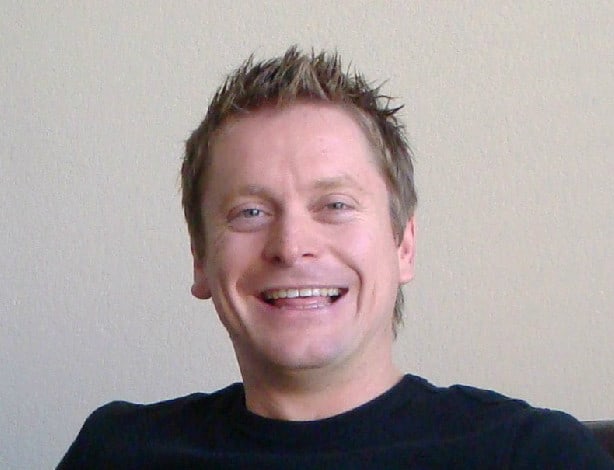

There’s no turbo switch for trading performance. But there are specific things that accelerate it, and in episode 164, I spoke with Steve Ward, one of the most experienced performance coaches in the trading industry, to find out what they are. Steve came to trading from sports psychology in 2005, after spending a year coaching traders at a global prop firm. Since then, 99% of his work has been in trading, banking, and investment. Over 14 years of working with prop traders, hedge fund managers, and independent traders across the globe, he’s developed a clear picture of what separates the ones who make it from the ones who don’t.
This episode covers the J curve concept, the role of discomfort tolerance in long-term success, situational awareness training, and what it actually takes to accelerate from beginner to consistently profitable. None of it is theoretical; Steve works with real trading data and has spent hundreds of hours watching how traders’ metrics evolve over time.
Watch the full episode below, then read on for the complete breakdown.
What consistently successful traders actually have in common
Steve is cautious about the idea of a formula for trading success. “There’s no seven steps, no five steps, no magic formula,” he says. But after working with hundreds of traders, he’s observed a cluster of factors that recur among the highest performers.
The first is genuine engagement with trading as an activity beyond the financial motivation. His highest-performing clients aren’t primarily driven by the money. They’re drawn by the puzzle, the complexity, the game of it. “I see that much more often than ‘I just want to make a lot of money.'” This matters because trading has long stretches of difficulty, and if money is the only hook, those stretches are nearly unbearable.
The second factor is resilience, specifically the ability to endure both the moment-to-moment discomfort of individual losses and the longer-term grind of difficult periods. Steve distinguishes this from simple toughness. It’s not about suppressing emotion; it’s about having enough commitment to the goal that you can keep going when the going is genuinely hard.
The third is a set of psychological skills for self-regulation, managing your own thoughts, impulses, and emotional states in the context of risk and uncertainty. “We’re all aware in trading that conceptually most of it is pretty straightforward. It’s not that we don’t understand what we’ve got to do. It’s just that when there is risk, uncertainty, consequences, ambiguity, and volatility all thrown in, it’s quite difficult to do it.”
The J curve: what new traders don’t expect
Steve spent a year co-managing a team of about 50 prop traders and collecting their trading data regularly. What he observed was a consistent pattern he calls the J curve. When traders first go live, they’re simultaneously cost-heavy (desk fees, transaction costs) and skill-light. They make more mistakes, their strategies aren’t well-tested, and they’re paying to be there. So performance dips significantly before it improves.
The J shape comes from the initial drop, followed by a gradual recovery as skills accumulate. Steve finds that almost every new trader underestimates both the depth of the initial dip and the time it takes to work back out of it. He sees this even in very intelligent, high-achieving people who’ve succeeded in demanding fields. “It’s always taken a lot longer than I thought it would. And it’s been a lot harder than I thought it would be. I get that consistently.” The optimism bias that gets you to start trading is the same bias that makes the early difficulty so disorienting.
Understanding the J curve changes how you approach the early phase. Instead of treating the initial losses as evidence of a broken strategy, you can see them as an expected part of the learning process, provided you’re managing size appropriately and actually learning from each mistake.
Managing short-term discomfort for long-term gains
One of Steve’s core observations from working with top performers in both sports and trading is that they manage discomfort differently, not by avoiding it, but by accepting it as the cost of doing the work. “How much discomfort can you tolerate, both in the moment and over time? The mediator of how much I can tolerate is how committed I am to the cause.”
This has practical implications for how traders structure their days. If you treat every drawdown as an emergency and every difficult period as a crisis, you burn through your psychological resources fast. The traders who perform at a high level over years have typically developed routines for processing difficult sessions and returning to a functional state relatively quickly. They have a repeatable process for going from “that was hard” to “here’s what I’m going to do next.”
Why suppressing emotions is like holding a beach ball underwater
Steve uses a vivid analogy for traders who try to manage their emotional states by suppression. Push a beach ball underwater and it pushes back hard; the moment you release it, it shoots up with more force than if you’d just left it alone. Trying to simply not feel fear, frustration, or greed during trading sessions is like that. The energy has to go somewhere.
The alternative is acknowledgment and redirection, recognizing the emotional state, understanding what it’s telling you, and then choosing how to act. This is a learned skill, not a personality trait. Steve has built training programs around it that he uses with traders at all levels, from new prop traders to fund managers. The principle is behavioral flexibility: being able to behave differently from your initial emotional impulse when the situation demands it.
Situational awareness training from the US Marines
One of the more striking parts of this conversation is when Steve discusses how US Marine Corps situational awareness training maps onto trading performance. Marines are trained to be simultaneously aware of their immediate environment, the broader tactical situation, and their own internal state, all while executing tasks under extreme stress. This is not intuitive behavior; it’s trained.
In trading terms, situational awareness means being aware of the current market environment, your portfolio state, your own cognitive and emotional state, and how those things are interacting with each other at any given moment. Traders who lose situational awareness tend to zoom in on a single position or a single time frame and lose the broader picture. The Marine training approach suggests this can be developed through deliberate, structured practice rather than just accumulated experience.
Functioning at your best in a world of hyper distractions
Steve is direct about the challenge of maintaining focus when every device, notification, and news feed is designed to pull your attention. Trading requires sustained, high-quality cognitive work in an environment that actively fights against it. The traders who deal with this best have usually built environmental and behavioral structures that reduce the decision load around attention management.
Specific approaches Steve covers include pre-session routines that get you into a focused state before the market opens, structured review processes at the end of sessions rather than leaving analysis to chance, and deliberate breaks that allow cognitive recovery rather than switching between tasks continuously. These aren’t revolutionary ideas, but they make a significant difference when applied consistently.
Shortcutting the path to profitability
The episode closes with a practical framework for accelerating through the J curve. Steve’s observation from tracking prop traders over time is that the traders who progress fastest are not necessarily the most naturally talented. They’re the ones who are most deliberate about reviewing their own performance, who have the clearest understanding of their own strengths and weaknesses as traders, and who can get feedback on what they’re doing well and what they’re not.
Without that deliberate review process, people tend to repeat the same mistakes in slightly different forms. With it, the curve shortens considerably. Most retail traders have no structured review process at all. Adding one, even a basic weekly review of executed trades against planned trades, tends to produce measurable improvement within a few months.
Related episodes
- Performing Under Stress and Uncertainty with Mandi Pour Rafsendjani
- High Performance Trading with Mandi Pour Rafsendjani
- Reducing Drawdown with Scott Phillips
Get the show notes & transcript
Want to accelerate your trading performance? Subscribe to the Better System Trader podcast for weekly interviews with the world’s top systematic traders and quantitative researchers.