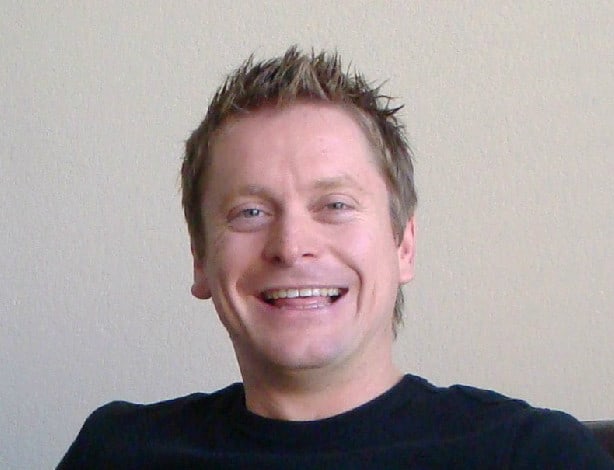
Most trading advice points in the same direction. Cut losses short. Aim for high win rates. Diversify broadly. Keep your profit targets conservative. Scott Welsh spent years following that playbook, and then decided to ignore most of it. After finishing second in the World Cup Championship of Forex Trading with a 74.5% return, he had some thoughts about why conventional wisdom keeps most traders stuck.
Scott came to trading through an unusual path. He spent years as a high-performance tennis coach, which gave him a framework for thinking about competitive performance that doesn’t translate neatly from textbooks. He started trading seriously around 2004, moved through stocks and Forex, began building automated systems from around 2012, and eventually entered the World Cup championship as a deliberate experiment in pushing beyond the cautious mindset that most systematic traders develop. This episode explores what he found.
The short version: the rules most traders follow aren’t wrong, but they’re optimized for protection, not performance. That’s a choice, and it’s worth making consciously.
Watch the full episode below, then read on for the complete breakdown.
The mindset shift that changed everything
Scott described trading culture as pulled in two directions: on one side, the promise that anyone can make astronomical returns with the right system; on the other, a constant drumbeat of “95% of traders fail, you can’t beat the market, Goldman Sachs has all the advantages.” Both extremes distort how traders set expectations and design their systems.
What changed his perspective was studying real trading contests with real money over decades. The people winning these contests weren’t grinding for 8% per year. They were targeting 50%, 80%, 100% returns. And they were doing it repeatedly, not as one-off lucky years, but as a consistent expectation of what their systems should produce in a good year.
Scott’s framing: if the market returns 8% and you generate 80% in a year, you’ve just collected 10 years of market returns. That math only becomes available to you if you build systems designed to produce it, and most traders never build those systems because they’ve pre-accepted that it’s impossible.
He came to this through a lens shaped by coaching. The competitive mindset — training not to participate but to win — translates directly to how you design and select trading systems. If your goal is to finish in the top five of a trading contest, you approach system selection completely differently than if your goal is to “find something that works.”
Why he looks for losing in his backtests
One of the more counterintuitive points Scott made: when he’s evaluating a system, he wants to see losing in the results. Not catastrophic losing, but meaningful losing. Systems that show suspiciously smooth returns are usually overfit. The market rewards approaches that most traders can’t hold through their losing periods.
He referenced Joel Greenblatt’s Magic Formula from “The Little Book That Beats the Market” as the clearest example of this principle. The system beat the market over every three-year rolling window in Greenblatt’s test. The reason it worked, Greenblatt argued, was that it also lost — sometimes for a year or two at a time. Those losing periods prevented traders from sticking with it, which preserved the edge. The system worked because most people couldn’t tolerate it.
Trend following is the same story. Win rates for robust trend-following systems typically run 35–50%. You lose the majority of your trades. But the winning trades are big, and the losing trades are small. The math works. What doesn’t work is the human tendency to abandon the system when it hits a losing streak, which it will, because that’s what the returns look like.
Starting from the return target, not the indicator
Scott’s process for preparing for the contest was to start from the desired return and work backward. If he needed 80% to be competitive, which systems could produce that? Most of what he was running couldn’t. So he cut them.
This sounds obvious but runs against how most traders approach system development. The typical approach is: find a pattern that seems to work, build a system, see what return it produces, and then evaluate. Scott reversed it. The return target came first, which created a filter for everything else. Systems that couldn’t clear the bar got eliminated regardless of how “interesting” they looked.
In practice, this meant going much heavier into trend following with large profit targets and staying in trades far longer than his natural instinct suggested. He abandoned his scaling-out approach — taking profits early and often — and shifted to letting winning trades run. That’s the mechanics behind large return distributions. You need the occasional very large win to pull the average up.
Position sizing and money management as the primary edge
Scott is emphatic that money management is more important than entry signals. Most traders spend their time optimizing entries. He spends his time on how much to risk per trade, when to increase exposure, and when to pull back.
For a contest environment, the willingness to take bigger position sizes when confidence is high — and the discipline to cut size when a system is underperforming — creates a return distribution that’s genuinely different from flat-position-size approaches. This is not reckless gambling. It’s structured risk allocation tied to system performance, not to emotion.
He was also direct about the psychological shift required. Taking meaningful position sizes feels uncomfortable if you’ve been conditioned to keep everything small and “safe.” That discomfort is often exactly where the edge lives. Profitable trading at scale requires accepting that individual trades will sometimes cause significant pain.
Breaking the specific rules that cost returns
The conventional rules Scott identified as worth questioning:
- Always scale out of winning trades — Scaling out caps your right tail. If a trend is running, adding to it or holding the full position extracts more value from the occasions when you’re right. Trend following wins by getting paid disproportionately on its winners. Scaling out systematically reduces that.
- Keep win rates high — High win rates often come with small average wins and large average losses, which destroys expectancy. A system with a 40% win rate and 3:1 payoff is more profitable than a system with a 70% win rate and 0.8:1 payoff. Focus on expectancy, not win rate in isolation.
- Diversify broadly across many systems — Concentration in your best ideas when conditions favor them is how outperformance gets generated. Broad diversification is a variance reducer, not a return generator. Both have their place, but confusing them leads to mediocre results.
- Conservative profit targets — Targets set too close to entry cut short the trades that generate the bulk of trend-following returns. Big winners are rare. You need to be in them when they happen.
What the contest experience taught about retail trading
Scott was trading Forex with automated systems. Finishing second with 74.5% in a real-money contest with real competition changed his perspective on what was achievable. It wasn’t that he found a secret edge nobody else had. He built solid systems, applied aggressive position sizing during periods when those systems were performing, and let winning trades run without getting in the way.
The lesson wasn’t that high returns are easy. They require drawdowns most traders won’t sit through, position sizes most traders won’t commit to, and the patience to stay in trends that most traders exit too early. The traders who generate compound returns at this level aren’t smarter. They’re just operating from a different set of assumptions about what’s possible.
Related episodes
- Episode 13: Hedge fund manager Andreas Clenow on trend following in stocks
- Episode 9: Gary Antonacci on the different types of momentum and how to use them in trading
- Episode 11: Ralph Vince on position sizing, optimal f, diversification and risk
- Episode 5: Kevin Davey on system development, the best systems, and backtesting
Want to learn more about building better trading systems? Subscribe to the Better System Trader podcast for weekly interviews with the world’s top systematic traders and quantitative researchers.