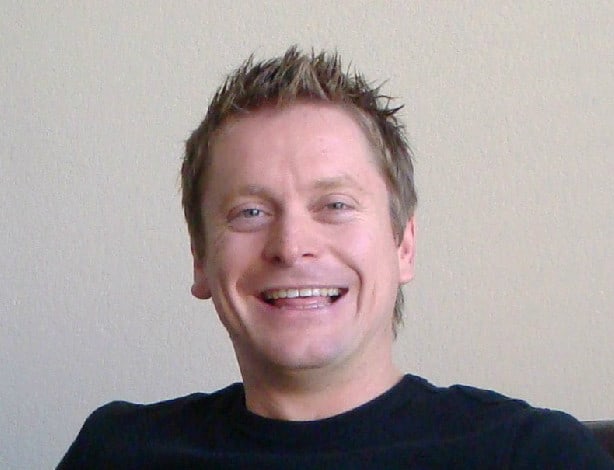
Markets do not stay the same. The strategies that worked in 2004 stopped working by 2008. The traders who survived that shift were not the ones with the best entries. They were the ones who could adapt. Steve Ward has spent over 15 years working with institutional traders, hedge funds, and prop desks on exactly this problem.
Steve started his career as a sports psychology coach, working with athletes across 33 different sports before making the transition to trading performance in 2005. His book, Bulletproof Trader, draws on that crossover expertise. In this BST live session, he breaks down what flexibility actually means in practice and why it is one of the top three ingredients he now sees in traders who last.
Watch the full episode below, then read on for the complete breakdown.
Why flexibility matters more than most traders think
Steve puts flexibility in his top three requirements for long-term trading success. The core reason is simple: all performance is contextual. What works in one market environment will not automatically transfer to a different one.
He saw this play out in real time at a large London trading group in 2005. Experienced floor traders who had made money in less efficient electronic markets were suddenly struggling as those markets evolved. About 20 to 25 percent of them adapted. The rest either stayed in denial or were eventually forced out.
That same cycle repeated three or four more times in the years that followed. Steve has watched it happen consistently. The traders who remain in the game over decades are not necessarily the most skilled. They are the most adaptable.
The learning phase versus the earning phase
One of the most practical frameworks Steve shares is the distinction between earning and learning phases. When your strategy aligns with market conditions, you are in an earning phase. Your job is to maximize opportunity. When conditions shift and performance drops, you have moved into a learning phase, whether you want to or not.
Most traders see difficult periods as lost time. Steve reframes them as the best opportunity to develop skills, test ideas, and improve. The traders who come out stronger are the ones who actively use those stretches rather than waiting for conditions to go back to normal.
He estimates that only about 10 percent of his clients come to him when things are going well. The other 90 percent arrive when performance has already deteriorated. That means most traders only invest in development when they have to, rather than building resilience before they need it.
Mental flexibility and the Stoic approach to change
Steve draws heavily on Stoic philosophy in his work. The core idea he applies: if you cannot control an event, you can still control your response to it. Market structure changing is outside your control. How you react to that change is not.
The practical exercise he recommends is perspective reframing. Instead of viewing a market shift as a threat, ask where the opportunity is. What can you learn? What skills can you develop? This is not positive thinking. It is a deliberate cognitive technique that works precisely because it redirects energy toward things that are actually controllable.
He also distinguishes between short-term and long-term flexibility. Short-term flexibility handles the daily ebbing and flowing of conditions. Long-term flexibility addresses the bigger structural shifts that happen every few years. Both need to be active processes, not reactive ones.
How to balance being systematic with staying flexible
Systematic traders often get told to follow the system. Just take the signals, ignore the noise. Steve does not disagree with this, but he pushes back on taking it too far.
His view: you can follow a system and also maintain awareness of whether that system still fits the current context. The three things to monitor continuously are the model itself, the market conditions it is trading, and the outcomes being generated. When those three things stop aligning, that is the signal to reassess, not ignore.
The danger he warns against is becoming too attached to the model. Once you stop questioning whether it still fits, you have lost flexibility. A hedge fund client Steve worked with recently spent two to three sessions in coaching before realizing his models were outdated and no longer suited to the current environment. The underperformance was not a trading error. It was a context mismatch.
Resistance to change and why it is normal
Steve’s seven-step framework for adapting to new markets includes a step on resistance, and he acknowledges it is one of the hardest. Two forces drive it:
- Neurological inertia: The brain defaults to existing pathways. Building new behaviours requires effort. The old bridge is always easier to use than the new one you are still constructing.
- Identity attachment: If you made money using a particular strategy, you connect your identity to that strategy. Abandoning it feels like losing part of yourself, even when the numbers clearly say you should.
He describes traders who intellectually know they need to change but emotionally cannot make themselves do it. It is more comfortable to keep using a failing strategy than to face the uncertainty of building something new. The antidote is finding a strong enough reason to change. Without clear purpose, discomfort wins.
Relapse is part of the process, not a failure
Change is not linear. Steve draws it like an uptrend on a chart: momentum, pullback, more momentum, another pullback. Relapse back to old behaviours is not a setback in the change process. It is a normal part of it.
The problem is not the relapse itself. The problem is the story traders tell themselves about it. If a relapse becomes evidence that you cannot change, it stops the process. If you recognize it as a normal step, you reset and continue building the new pattern.
This reframe matters practically. Many traders use a relapse as a reason to quit the whole effort. They binary-fail instead of treating it as one data point in a longer progression.
The Futures Lab: preparing for market shifts before they arrive
One of the most concrete tools Steve describes is the Futures Lab concept, borrowed from UK Sport’s approach to Olympic preparation. The basic question: what will the markets look like in 2 to 4 years, and what do you need to be able to do to extract returns from those conditions?
The process is not about predicting the future. It is about building a range of possible futures and developing skills that apply across those scenarios. A client Steve worked with at a commodities firm used this approach to stay consistently ahead of structural shifts rather than scrambling to catch up after they had already happened.
The key distinction is thinking in multiple possible futures rather than one. Rigidity comes from being committed to a single expected outcome. Flexibility comes from holding several possibilities at once and being prepared for more than one.
Practical actions to become more adaptable
Steve closes with four specific actions:
- Make flexibility a core value. Decide consciously that adaptability is a strength you want to develop, not just a thing that happens to you.
- Accept impermanence at the psychological level. Nothing lasts forever, good or bad. When markets shift, it is not a surprise. You were expecting it.
- Use the Futures Lab regularly. Spend time thinking about what future market conditions might look like and what skills you would need for each scenario.
- Stay aware of context. Continuously ask whether the current context is the same as the context in which you built your models. Label mismatch matters. Two recessions with the same name can be completely different environments.
Related episodes
- The best non-trading book on trading psychology
- 5 tips for better trading performance with Rande Howell
- How to detect a failing trading strategy with Kevin Davey
Get the show notes & transcript
Want to improve your trading results through better decision making? Subscribe to the Better System Trader podcast for weekly interviews with the world’s top systematic traders and quantitative researchers.