188 – “Why trading can be so challenging (and what to do about it)” – Adam Grimes

Why is trading so hard to learn? Not just hard to do – hard to learn from. People with exceptional track records in medicine, engineering, law, and science come to trading and struggle despite their intelligence and discipline. Something about the market environment specifically resists the kind of learning that works everywhere else.

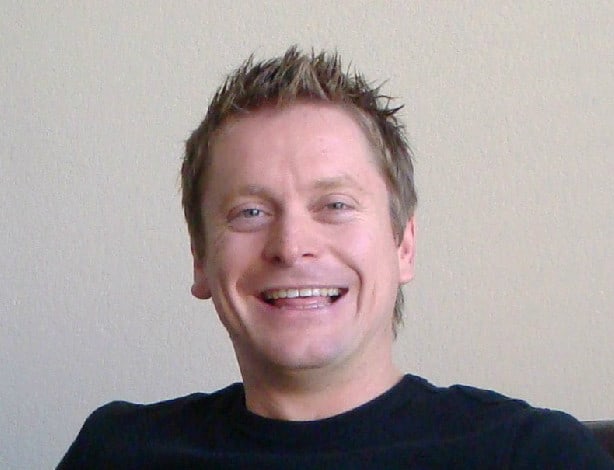
Adam Grimes has thought about this more carefully than almost anyone. A professional trader with experience across currencies, stock index futures, commodities, stocks, and options, he has also spent years teaching trading – encountering hundreds of intelligent, successful people who found it far harder to acquire trading skill than they expected. This episode is his diagnosis of why, and what to do about it.

Watch the full episode below, then read on for the complete breakdown.

The One-Word Answer: Randomness

If you ask Adam why trading is difficult and allow only one word, the answer is randomness. Not because markets are purely random – they are not – but because the degree of randomness is much higher than any other skill-based field humans typically learn in, and we are poorly equipped to process it correctly.

“As humans, that’s not something we have evolved to calculate correctly. Maybe there was no benefit for having those skills. But for whatever reason, we don’t tend to process random events very well. And we tend to make a lot of mistakes centered around randomness.”

This is not a satisfying answer because it does not point to a specific fix. But understanding it is the prerequisite for everything else.

Why the Market Is a Wicked Learning Environment

Adam draws on research from cognitive psychology to explain why trading resists standard learning methods. The term “wicked learning environment” comes from the psychological literature and refers to environments where the feedback you receive is loosely connected to your actions – in contrast to “kind” learning environments where feedback is immediate, consistent, and directly tied to what you did.

Piano is a kind learning environment. When you hit the wrong note, you hear it immediately. What works on Monday works on Tuesday. You can apply deliberate practice – the structured approach to skill development that works in athletics, music, and chess – and it produces predictable improvement.

Trading is wicked. You can execute a mean reversion trade correctly and lose money for weeks. You can execute it incorrectly and make money for months. “The edge you have is small and your outcomes are rather loosely connected to your actions.”

This is why deliberate practice largely fails in trading: “The learning environment is a wicked environment. It is not the type of environment where you get the kind of feedback, the kind of consistency you need to apply deliberate practice.”

The Dangerous Lesson of Lucky Beginners

Adam describes a phenomenon he has observed at multiple points in his career: beginners making enormous amounts of money through luck in unusual market conditions, then being unable to unlearn that experience.

The 2000 dot-com period saw a pre-school teacher open a $2,000 account and build it to close to $300,000 in weeks. The experience was real. The money was real. The lesson it taught – that this approach works – was dangerously wrong. “That person will probably never be able to actually learn to trade because they’ve had that powerful learning experience of doing something very stupid that ended up having a very good outcome.”

The market does not distinguish between profitable trades made with skill and profitable trades made with luck. The feedback is the same. Learning to separate them is one of the core challenges of developing trading competence.

Why Engineers Struggle More Than Expected

Among the groups Adam has taught, engineers consistently face unexpected difficulty. The counterintuitive observation: they are well-equipped for the analytical side of trading but poorly equipped for the feedback side. Engineering operates in a kind learning environment – precise cause and effect, reliable feedback, consistent results from consistent actions. The transition to a wicked learning environment requires unlearning deeply ingrained habits of interpretation.

The analytical skills translate well. The expectation that careful analysis should produce reliable results does not. Learning to hold a well-researched position through extended adverse runs, knowing the analysis is correct even when the market is disagreeing, requires a fundamentally different relationship with feedback than engineering develops.

Systematic vs. Discretionary: Less Different Than It Looks

Adam’s view on the systematic-versus-discretionary debate is nuanced: the two approaches are less different than they appear, and both benefit from incorporating insights from the other.

Good systematic traders have done the statistical research. Good discretionary traders have absorbed enough market history that their pattern recognition – while not explicitly coded – contains real information. “There are things our brains can do in terms of analysis and pattern recognition that you cannot do with statistics. On the other hand, if you don’t ever do stats, you’re missing that.”

Most systematic traders would benefit from openness to inductive insights. Most discretionary traders would benefit from the structure of rigorously researched approaches. The categories are cleaner in theory than they are in the behaviour of skilled traders in practice.

Practical Implications for Learning to Trade

Several things follow from understanding trading as a wicked learning environment:

  • Good performance in the short term does not mean you have a working strategy. It may be luck in a favourable regime.
  • Bad performance in the short term does not mean you have a broken strategy. It may be a normal drawdown period for a valid approach.
  • The appropriate response to both is the same: evaluate the quality of the process, not the quality of recent results.
  • Backtesting and statistical research are not optional extras. In a wicked learning environment, they are the only reliable source of feedback.

Related episodes


Want more on trading psychology and systematic methods? Subscribe to the Better System Trader podcast for weekly interviews with the world’s top systematic traders and quantitative researchers.

Scroll to Top