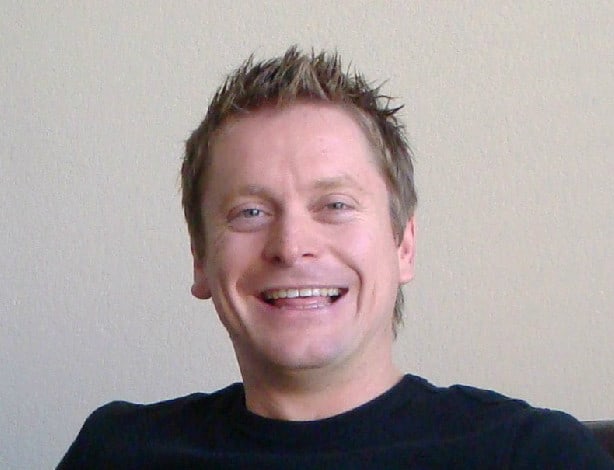
3 lessons from chart trader to algo hedge fund manager: Tomas Nesnidal

Tomas Nesnidal started as a discretionary chart trader sitting in front of screens for eight hours a day. Today he runs an algo hedge fund with thousands of live strategies across multiple markets and time zones. The transition did not happen overnight, and the lessons he carries from that journey are more practical than most trading education you will find anywhere.

This is his fourth appearance on BST. In this episode, recorded just before the end of 2023, Tomas breaks down the three defining moments that shaped his career. The conversation covers the shift from discretionary to algorithmic trading, the development of his breakout trading model, and what a former CIA agent taught him about exits that changed how he builds every strategy today.

Watch the full episode below, then read on for the complete breakdown.

Lesson 1: Moving from discretionary to algorithmic trading

Tomas’s first style was discretionary momentum trading on Russell 2000 futures. The process was simple: wait for a trend, wait for a pullback, take the momentum trade. He traded the first two hours of the session, having discovered through his own Excel analysis that the vast majority of his profits came from that window. He then went ahead and eliminated the rest of the day entirely.

The trigger for moving to algorithmic trading was a practical one. When he and his wife started traveling for months at a time in Southeast Asia, the 3am start time for U.S. sessions made discretionary trading unworkable. His primary income depended on a schedule he could no longer keep.

A friend who was already running automated strategies showed him what was possible. Two or three simple strategies. Clear code. Defined rules. The friend demonstrated the thought process, the backtesting approach, and the management requirements. Tomas’s reaction: “I can do this.” His background in Excel analysis and a basic knowledge of a coding language called BASIC made the transition easier than he expected.

His framing on discretionary versus systematic trading is worth noting. He observes that discretionary trading suits younger traders with faster reflexes and the tolerance for screen time. As traders age, the appeal of a lower-management systematic approach grows. That is not a value judgment. It is an honest observation about how people and their lifestyles change.

The importance of trading around a life goal, not just a P&L target

Before getting into the model itself, Tomas makes a point about motivation that is easy to overlook. Most traders focus on how much money they want to make. He argues that is the wrong starting point.

The right starting point is clarity on what the money is for. Travel. Freedom. A specific lifestyle. Security for a family. Once you know what you are actually trying to achieve, you can work backwards to a realistic P&L target and build a trading business that serves that goal without overextending.

He is direct about greed: it will eventually be punished by markets. The traders he has seen pursue more, more, more tend to blow up or burn out. The ones who define a specific target and build toward it with discipline tend to stay in the game longer.

Lesson 2: Finding breakout trading and building a universal model

After the move to algo trading, Tomas spent time in mean reversion, statistical arbitrage, and various other approaches. None of them fit. Mean reversion did not match what he already understood from discretionary trading. Statistical arbitrage was too slow and too boring. Options were intellectually interesting but demanded constant position management that drained his energy.

The breakthrough came when his friend showed him two or three simple breakout strategies. One was a variation on “if the market breaks the high of the first 45 minutes, enter.” The logic connected directly to what Tomas already knew from discretionary trading: establish a trend, wait for conditions, enter on momentum. The cognitive link was immediate.

The bigger development was conceptual. After spending 18 hours a day trying to build individual strategies, Tomas realized he was working on the wrong problem. The question was not how to build one good strategy. It was how to build a template that could generate thousands of strategies efficiently.

His solution was a universal breakout model, which he describes as a blueprint with defined components. The components can change. The blueprint does not. Like a car chassis that accepts different engines and bodywork, the model accepts different market conditions, entry triggers, and exit techniques while maintaining the same structural logic.

With this model in place, he went from 18-hour days to 2-hour days. The computer runs permutations overnight. He comes in the next morning, sorts the results, and selects the viable candidates for the next development phase. He has never changed the core model. He added a market calibration and mapping layer as an upgrade, but the structural blueprint from years ago still underlies everything.

Why robustness testing matters more than finding the edge

One of the most provocative things Tomas says in this episode: stop trying to explain why your strategy works. The narrative you build around an edge is usually a story you construct to satisfy your intellect. It rarely tells you whether the edge will survive out of sample.

What actually determines whether a strategy belongs in live trading is robustness testing. He puts it plainly: pay more attention to robustness testing than to the edge itself.

He spent time working with PhD-level economists who built strategies with compelling theoretical rationale that performed terribly in live markets. Meanwhile, strategies with no obvious fundamental story but strong robustness testing performed consistently. The lesson he took: intellectual elegance and real-world durability are different things.

Lesson 3: What a CIA agent taught him about exits

The third defining moment involves a mentor Tomas calls Mike, a former CIA agent who had worked in Moscow in his early career. Mike passed away during COVID, and Tomas credits him with everything he knows about trade management.

Mike’s core teaching: successful trading has nothing to do with entries. It is all about exits.

To prove the point, Mike organized a small group exercise using options and random stock selection. They literally flipped a coin to decide entries. Over six months, using deliberate exit management techniques, the group produced a 100 percent return.

One specific exit technique: when the CCI indicator crossed above 100 after entry, hold the position until it drops back below 100. The technique prolongs exposure to established trends rather than cutting winners early. Tomas coded this up with random entries in an Excel spreadsheet using Russell 2000 data and saw consistently positive outcomes, crude but positive.

The implication for systematic traders: the entry matters, but not as much as most people think. The exit is where the real P&L is determined. And yet most traders spend almost all their development time on entries.

Win percentage, reward-to-risk, and building in positive expectancy

Tomas uses a simple mental check for every strategy in his portfolio. He looks at win percentage and reward-to-risk ratio together, not separately.

For his breakout strategies, win percentage typically runs between 40 and 55 percent depending on the period tested. Reward-to-risk is typically between 1.5 to 1 and 4 to 1. The critical question is: if win percentage drops from 50 to 40 percent, does the strategy still make money?

If the reward-to-risk is only 1.5 to 1 and win rate drops to 40 percent, the math stops working. That is why he targets a minimum 2 to 1 reward-to-risk on his breakout models. With that in place, a 10-point drop in win percentage does not break the strategy’s positive expectancy.

He deliberately builds this into the strategy development process: whatever stop loss the system identifies as appropriate, the profit target is automatically set to twice that distance. The constraint is structural, not post-hoc optimization.

Related episodes

Get the show notes & transcript


Want to learn how to build systematic trading strategies that last? Subscribe to the Better System Trader podcast for weekly interviews with the world’s top systematic traders and quantitative researchers.

Scroll to Top