
Improving trader performance

Trading knowledge is not the same as trading performance. A trader can understand probability, read every book, and know their system cold, yet still freeze at entry, cut profits too soon, or blow up during a drawdown. The gap is not knowledge. It is the emotional state that mind is operating in when risk hits.

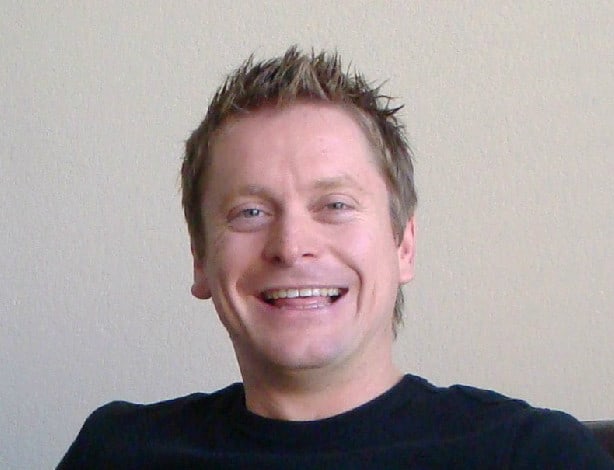
Rande Howell is a licensed therapist and performance coach who has spent over 15 years working with traders at all levels. His background spans golf and banking performance before serendipitously shifting to traders. In episode 14 of Better System Trader, he explains why the same emotional wiring that kept our ancestors alive is exactly what destroys trading accounts, and how to systematically rebuild the mind you bring to the moment of performance.

Watch the full episode below, then read on for the complete breakdown.

Why your survival brain is working against you

The most common issue Rande sees with developing traders is hesitation at entry. Not ignoring signals, not overtrading, but simply not being able to pull the trigger on a valid setup. The cause is not lack of discipline. It is evolutionary biology doing exactly what it was designed to do.

The brain is wired toward certainty. Over thousands of generations, the organisms that avoided the unknown survived. That bias is baked into the structure of your nervous system. Trading requires the exact opposite: you must step into genuine uncertainty, knowing you can do everything right and still lose, and act anyway because probability is on your side.

Your emotional brain does not process probability. It processes threat. When you approach a valid entry, the survival system registers the unknown as danger, generates hesitation, and then reinforces that circuit when you avoid the trade and nothing bad happens. Every time hesitation keeps you out of the market, the brain rewards itself. The pattern gets stronger.

Rande’s framing: you are not undisciplined. You are wired. Recognizing that the hesitation is biology, not character, is the starting point for changing it.

Emotions are biological, not psychological

Rande makes a distinction that most trading psychology discussions miss: emotions are biological before they are psychological. Fear is not a thought. It is a physical state. Shallow breathing, tightening muscles, fixed gaze, elevated heart rate. These are the signature of the fear response before you have any conscious awareness of it.

He has traders put up a mirror or set up a video feed pointed at themselves during trading. Most are startled by what they see. The physical signs of fear are already happening before they notice any emotional disturbance in their thinking. By the time fear appears as a thought, it has already hijacked the cognitive resources you need to trade.

The practical implication: emotional regulation starts with the body, not the mind. Diaphragmatic breathing, moving air into the belly and through the chest, is physically incompatible with the fear state. You cannot maintain shallow fear-breathing and belly-breathing simultaneously. One disrupts the other. Relaxing the muscles does the same thing. This is not positive thinking. It is interrupting a biological process at the biological level.

A trader Rande was coaching was moving up to a higher position size. At rest his heart rate was 60 beats per minute. When sizing up, it spiked to 80. With a heart rate monitor in real time, he could see the fight-flight trigger as it happened, not after it had already distorted his decision-making. Catching the signal early gives you the window to calm the state before it becomes a hijack.

The lion and the cougar: two hunting strategies

Rande uses the contrast between two apex predators to illustrate what patience actually means in trading.

The African lion hunts by stalking and chasing. It takes coordinated group action and produces results through aggressive pursuit. It is a successful strategy in open savanna. Put that lion in an American forest and it starves.

The American cougar climbs a tree or a ledge and waits. Watching it, you might think the animal was sleeping. High kill rate, very low injury rate. Place that cougar on the Serengeti and it fails immediately. Same category of animal, different strategy tuned to a different environment.

Most high-achievers who come to trading arrive with lion psychology. They have been rewarded for making things happen, pushing hard, and taking decisive action. That approach works in business. In trading, it gets you killed. The market is not something you can press into giving you what you want. You wait for it to show you what it is willing to offer.

Boredom during periods of no valid setups is a signal, not a problem to solve. It reflects an urgency to act that has no place in trading. A bored trader starts seeing entries that are not there. A patient mind sees the chart as it actually is, not as a function of what the trader wants to happen.

Rande’s reframe: patience is the work of trading. It is not waiting for the real work to begin. It is the practice.

The alpha mentality and why corporate success transfers badly

Rande describes the alpha mentality as one of the biggest obstacles he sees. Successful people in business, law, medicine, and the military have built careers on outcome control. They push. They set goals and pursue them with drive and urgency. When things go wrong, they work harder to fix them.

None of that translates. In trading, you do not control outcome. You cannot make things happen. The market owes you nothing. The alpha who comes to trading and brings the same psychology that made them successful elsewhere will be punished by it, often severely.

Perfectionists have the same problem from a different direction. They have succeeded by not being wrong. Trading is a probability game where you can execute flawlessly and still lose. The perfectionist cannot separate a good process loss from a mistake, so every drawdown becomes a psychological crisis.

Engineers, pilots, and surgeons often land in this category as well. They have been trained to eliminate error. They know their trading rules cold in theory. But the emotional control required to apply that knowledge under live risk is a completely different capability, one they have never had to build.

Euphoria is more dangerous than fear for experienced traders

For traders who have broken through and are reliably extracting capital from the markets, the primary threat shifts. Fear keeps you out of trades. Euphoria puts you in too many, with too much size, at exactly the wrong time.

Rande cites research around the JP Morgan London Whale incident. The risk manager on that desk became ill and was absent for several months. During that period, a neurobiologist was studying the traders’ biology in real time. He found that testosterone and dopamine levels were so elevated that the traders were effectively cognitively impaired. When given self-assessment tests, they reported being flatline calm. They were drunk with euphoria and could not see it.

The feeling of being on a roll moves from humble confidence to overconfidence gradually and imperceptibly. What Rande sees in his coursework: traders learn the process, it starts working, they decide they have it figured out, and they start skipping steps. The system that produced the results gets abandoned incrementally. Bad months follow.

His target emotional state for trading is what he calls discipline impartiality. Not good. Not bad. Steady, engaged, capable of seeing probability clearly without the distortion of either fear or euphoria. When someone in one of his seminars asked if he was saying they should not feel good while trading, his answer was yes, exactly. Feeling good is euphoria beginning to form, and it distorts probability assessment in the same direction that fear does, just from the other side.

Process versus outcome: the hurdler at the Olympics

Rande watched an Olympic hurdles race where the American was heavily favored. After winning and apparently setting a world record, reporters crowded around asking what he was thinking during the race. Did he know he was going to win? What did it feel like?

The hurdler’s answer: 1, 2, 3, 4. 1, 2, 3, 4. 1, 2, 3, 4.

That sequence is a process mnemonic. It represents the specific physical execution of a hurdle: what the body and mind need to be doing at each moment in the race. The athlete had spent years training with a sports psychologist to maintain that process orientation at exactly the moment the crowd would expect him to be thinking about winning.

The reporters were projecting outcome thinking. The champion was executing process thinking. He celebrated the outcome afterward, when the race was over. During the race, outcome had no place. It would only have distracted from the execution that produced the result.

Professional traders operate the same way. The P&L statement, open while trading, is outcome thinking. Watching the account value as positions move is outcome thinking. When you are in the moment of execution, the only question is: am I bringing the right mind to this trade? The money takes care of itself when the process is right.

The pre-trading ritual and managing drawdowns

Rande teaches a pre-session practice. Wake up and scan the body for tension before touching the markets. Tension is the early signal of an emotional state building before it becomes a full feeling. Address it with breathing and relaxation, not by ignoring it or suppressing it.

He describes trading psychology as having a useful window before session start of anywhere from 20 seconds to 45 minutes depending on the trader. An alpha who tends to chase trades might have 20 seconds before urgency overtakes the prepared state. A calmer personality might maintain the state for longer. The practice is to identify your own pattern, anticipate where you typically have problems, and prepare the mind for that moment specifically, rather than hoping it will not happen this time.

For drawdowns, the framework is a simple diagnostic. After a loss: was this a method mistake, meaning you should not have taken the trade? Or was it a psychological mistake, meaning fear, grandiosity, or euphoria distorted your execution? If neither, you are on the wrong side of probability this time, but the process was right. You would take the trade again.

That distinction is what separates probability-based thinking from outcome-based thinking. A loss on a correctly executed, well-designed trade is not a problem. It is the cost of being in a probability game. The antidote to the discomfort of that loss is self-compassion, not willpower. Berating yourself does not make a better trader. Compassion calms the amygdala down so it can learn to trust higher brain function over time.

When to work with a performance coach

Rande is clear about which traders benefit most. It is not the brand-new trader looking for a psychological edge before developing a strategy. It is the experienced trader who can trade well in simulation but cannot apply that knowledge under live risk, who knows intellectually what to do and cannot do it when real money is on the line.

That trader has arrived at what Rande calls the “I am the problem” moment. They have exhausted the external search. They have tried indicators, systems, different markets. They have the knowledge. The barrier is the mind they bring into the moment of execution. That recognition, that the obstacle is internal, is the prerequisite for the work to be useful.

His comparison to golf: on the PGA tour, everyone can drive and putt. There are only about ten money players. The difference is not technique. It is what they do with their psychology under pressure. A four-foot putt that a professional has made thousands of times becomes a crisis at the crucial moment. That is entirely psychology. Trading at the high end of performance works the same way.

Related episodes

Get the show notes & transcript


Want to build the mental edge that turns trading knowledge into trading performance? Subscribe to the Better System Trader podcast for weekly interviews with the world’s top systematic traders and quantitative researchers.

Scroll to Top