

Dr. Gary Dayton has been an active trader since 1999, trading equities, futures and options.
He is a psychologist and holds a doctorate in clinical psychology and a certificate in human performance/sport psychology from Rutgers University.
He is President of Peak Psychology, Inc., a consulting firm that specializes in developing “peak” performance in traders.
Dr. Dayton stands apart as a trading psychologist in his use of the Mindfulness-Acceptance-Commitment (MAC) approach to peak performance, introducing traders to the practice of mindfulness to help them overcome fear and other unwanted trading emotions and develop the concentration and focus needed to trade successfully.
In this episode we discuss why traditional approaches to controlling emotions don’t work, the role of emotions in trading and how mindfulness can improve trading performance. He also shares some tips on how to get started practising mindfulness, the benefits it can have outside of trading and how the approach of Mental Parking can increase focus.
Sponsors

Quantocracy.com provides a curated mashup of quantitative trading links so it’s a great way to keep up to date with all the great trading stuff being released. I use the website regularly and I know a number of other podcast guests do too so head over to Quantocracy.com and check it out.
Show your support
While you’re listening, it would be great if you could show your support by leaving a brief review of the podcast in iTunes. This really helps to spread the word and reach even more listeners!
Topics discussed
- Comparisons of sports and trading performance
- Traditional approaches to handling emotions in trading and why they don’t work
- Why it’s impossible to suppress your emotions
- Landing a plane in the Hudson River and what the Captains response teaches us about trading
- The role of emotions and how experienced traders actually leverage emotions in trading
- The concept of Mindfulness and the benefits to traders
- How to use Mindfulness when trading
- The evidence that Mindfulness can improve trading performance and how it impacts the brain
- How to get started practising Mindfulness
- How to use Mental Parking to increase focus and productivity
- How exercise can improve mental and trading performance
Resources mentioned in this episode
- Gary can be followed at his website tradingpsychologyedge.com and on twitter @DrGaryDayton
- Recommended books:
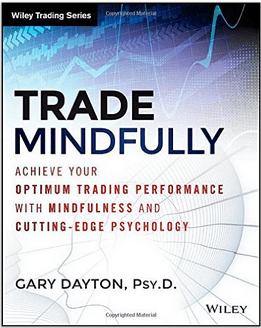 |  |
Quotes
GIVEAWAY CLOSED – Win a copy of ‘Trade Mindfully’ by Dr Gary Dayton
As traders we all want to do whatever it takes to improve our performance and be the best traders we can be, even if that means reading one of those boring trading psychology books, right?
Well this book ain’t boring but it could help improve your trading performance so why not check it out?
Trade Mindfully applies cutting-edge psychological techniques to trading skills, allowing traders to improve their mental outlooks and maximize the potential of their trading strategies.
The book draws upon recent psychological research in behaviourism to teach new approaches that call for better focus, more confidence, and more positive perspectives and outcomes.
Enter the draw to win a free copy of this book, it could just take your trading to the next level. How good would that be???
Top tips from this episode
Here are few of my favourite takeaways from the chat with Robert:
- The story of Captain Sullenberger landing the plane in the Hudson River – He experienced a number of strong emotions but he put all of his effort into focussing on the things that mattered at that point in time. He wasn’t thinking about the passengers directly, he was focussing on all of the steps required to land the plane safely, like the correct speed, angle of the plane and wings etc. As traders we can take the same approach in times of emotional stress, focus on the tasks that actually matter, like trade execution.
- Being mindful brings us into the present moment – Being mindful applies not just in trading but other areas of life too. When we’re doing something that requires focus our mind can often interrupt us. I’ve started using the Mental Parking technique by acknowledging the idea and quickly jotting it down so I can get back to the original task. What I’ve found by doing that is I can maintain my focus for a longer time plus I often find that when I come back to the idea that interrupted me it’s not that important any more, it was just a distraction.
Got A Question, Topic or Guest you want to see on the Podcast?
Do you have a specific question, topic or guest you’d like to see on a future podcast episode?
Click here and submit your suggestion for a chance to have it featured on an upcoming podcast episode.
Get the Transcript
Subscribe to Better System Trader and never miss another episode!
 |  |  |  |
Please support the podcast by giving an honest Rating/Review for the show on iTunes!