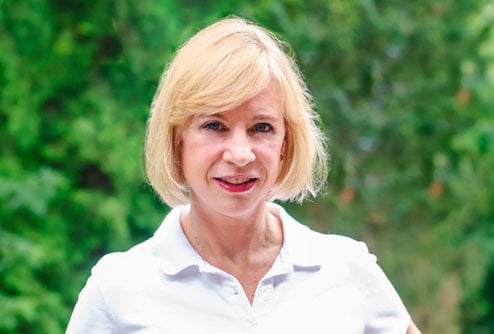
Linda Raschke has been trading for nearly four decades. She’s lived through market crashes, brokerage failures, hurricanes, and enough black swan events to fill a chapter of Taleb’s book. And she’s still trading. This episode is about what that actually looks like from the inside: the work ethic, the mindset, the confidence that survives when the market takes it from you, and how she thinks about survival in a business where most people don’t last ten years.
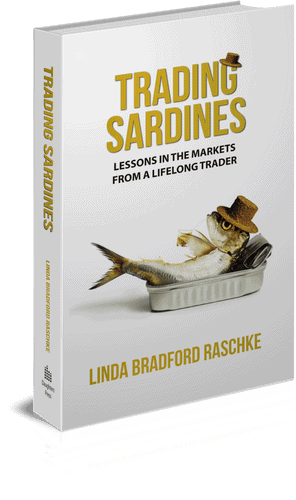
Linda joined Better System Trader around the release of her book “Trading Sardines: Lessons in the Market from a Lifelong Trader.” The title is a nod to the trading sardines joke, where sardines pass between merchants being bought and sold, but nobody actually eats them. The market as a game of perception and price, not just fundamentals. The book is personal, often funny, and unusually honest about the disasters she’s navigated.
This is the third time Linda has been on the show. That’s not a coincidence. She is one of the most direct and practical voices in trading, and she tends to say things that stick.
Watch the full episode below, then read on for the complete breakdown.
The trader who survives outliers
Linda’s trading career has been hit by an unusual number of extreme events: two hurricanes, the World Trade Center attacks (she did business one block away), MF Global’s collapse, and gaps that came out of nowhere. By her count, over 50,000 trades and roughly 10 genuinely catastrophic surprises.
That framing is worth sitting with. Ten bad events over 38 years sounds like terrible luck. Put against 50,000 total trades, it’s within normal distribution. The problem is that those events are memorable because they hurt badly. The 49,990 trades that didn’t blow up don’t leave the same imprint.
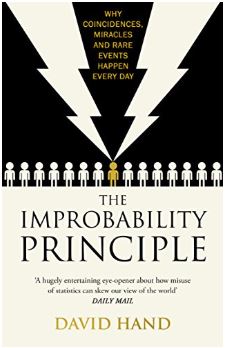
Linda referenced “The Improbability Principle” by David Hand, a book that explains mathematically why rare events happen more often than our intuition expects. The key insight: once you understand how many people and how many events are occurring, what seems like impossible coincidence becomes entirely probable. She recommended it to anyone who wants to think more clearly about tail risk.
Her bottom line on outliers: “The reason people blow up from outliers is because they don’t understand leverage. Long-Term Capital Management didn’t have to blow up. They could have ridden it out, but they were just way too big.” The lesson is sizing. Not stopping. Not prediction. Sizing.
The role of luck in trading results
Most traders are reluctant to credit luck. Linda isn’t. She acknowledges it openly while also holding the view that preparation creates better conditions for good luck to materialize. Her reference point is the old adage: luck is a residue of effort.
The distinction she draws is between the luck you can’t control (which events happen to hit you) and the preparation that determines whether those events destroy you or just set you back. Being positioned small enough, being diversified enough, having systems robust enough to keep running through disruption: that’s not luck. That’s a choice made before the event arrives.
Confidence: where it comes from and how to rebuild it
Confidence comes up constantly when talking about trading longevity. Linda’s view is that genuine confidence has to be built on something real. It doesn’t come from telling yourself you’re good. It comes from the accumulated record of having done the work.
She carries three quotes with her in a trading notebook that she’s kept for over 25 years. The first is from Arnold Schwarzenegger’s book “The Education of a Bodybuilder,” and she reads it almost every day:
The secret is contained in a three-part formula I learned in the gym: self-confidence, a positive mental attitude, and honest hard work. Many people are aware of these principles, but very few can put them into practice, particularly that last. I work harder at it. The others think they work hard, but they don’t really push themselves to their limits.
The second excerpt is about preparation: “Confidence doesn’t come out of nowhere. It’s the result of constant work and dedication.”
These quotes have been in her trading notebook for 25 years for a reason. When a bad run strips your confidence, the answer isn’t positive thinking. It’s going back to the preparation. More research, more review, more repetitions at whatever it is you’re trying to improve.
She also mentioned that traders who have succeeded in other competitive pursuits tend to transfer confidence more readily. Athletes, poker players, people who’ve built something. They know what it feels like to earn results through effort, and they can draw on that when markets make them doubt themselves.
Work ethic and the trading lifestyle
When asked what’s responsible for her longevity in the business, Linda’s answer was blunt: “It’s never been a job to me. I don’t even think of it as work. I love it.”
Her day starts with checking overnight market action before the US open. She doesn’t rush into trades first thing. She watches, gets oriented, and lets her systematic signals come in during the morning session. The research component is evenings and weekends, grinding through data and thinking about what might be missing from current models.
Beyond the market work, she’s made deliberate choices about how she manages her physical and mental state. At the time of this recording, she’d recently given up coffee and alcohol, not for lifestyle reasons, but specifically because she felt her thinking had gotten fuzzy and she wanted to operate at full capacity. She trains at the gym. She manages her diet with performance as the goal.
The point isn’t that you need Linda’s exact regimen. The point is that she treats cognitive performance as a serious variable that can be optimized, and she makes adjustments based on feedback from her own results.
The underestimated difficulty of live trading vs. backtests
One of Linda’s consistent messages across multiple appearances on BST is the gap between how a strategy looks in a backtest and what it actually feels like to trade it live. The 45-degree equity curve from lower-left to upper-right looks manageable from a distance. You can see the drawdowns, and they look recoverable because you already know the outcome.
Live trading is different because you get the day-to-day feedback without knowing the outcome. She described the experience of being nine months into a drawdown, down 15 percent, and having to decide whether to keep going. On a backtest chart, that’s a small blip. In live trading, it can feel like the strategy is broken.
Her recommendation for bridging that gap: zoom into the backtest. Don’t look at the 20-year equity curve. Look at the worst six months in detail, week by week. Put real dollar amounts on it. Ask yourself how you’d feel if your million-dollar account was down $150,000 after a year of work, and you still had no idea when it would recover. Then decide if you can actually trade that system.
Building a portfolio to fill the holes
Linda’s broader point about portfolio construction maps to something she’s talked about across multiple episodes: no single strategy works in all environments, and the solution isn’t to find a strategy that does. It’s to combine strategies whose bad periods don’t overlap.
She trades systematically and watches for model context, the qualitative conditions that her quantitative rules don’t capture. That combination of systematic structure with discretionary awareness of what’s happening around the model is something she’s refined over decades of live trading.
Staying in the game: the one non-negotiable
Across the whole conversation, one theme kept returning. The primary goal in trading isn’t maximizing returns. It’s staying in the game long enough for your edge to work. Every decision that seems like it might generate more profit but that increases the risk of blowing up is a bad trade, full stop.
Linda has survived things that took out much larger operations. The reason isn’t superior prediction or genius risk management. It’s that she never got big enough to be unable to absorb what the market threw at her. That constraint, staying small relative to what can go wrong, is the thing that kept her playing while others went home.
Get the show notes & transcript
Related episodes
- 049: Linda Raschke on trading edges, modelling markets and day trading techniques
- 124: Trade Management with Linda Raschke
- 027: Dr Gary Dayton on mindfulness and how it can improve your trading
- Why trading can be so challenging (and what to do) with Adam Grimes
Want to build a trading career that lasts? Subscribe to the Better System Trader podcast for weekly interviews with the world’s top systematic traders and quantitative researchers.