
Quantitative Trading Strategies: Ernie Chan on Momentum, Drawdown & Automation

Ernest Chan, known to most as Ernie, spent years as a machine learning researcher at IBM before moving to Morgan Stanley’s Data Mining Group and eventually to proprietary trading desks at Credit Suisse and other major firms. Around 2006 he left institutional trading to trade his own account and manage a hedge fund. That transition changed how he thinks about strategy design: when you’re trading your own money, the downside matters as much as the upside, and you stop trying to impress anyone.

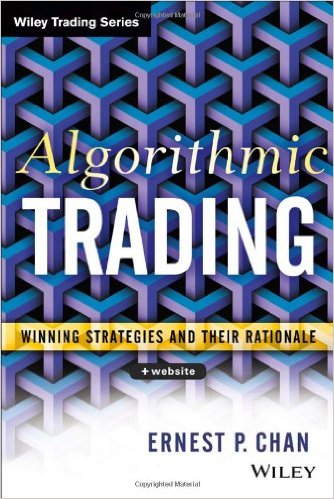
Ernie is the author of two well-regarded books on quantitative trading and runs a blog that has influenced how a lot of retail quants approach systematic strategy development. In episode 12 of Better System Trader, we covered a wide range of practical topics: how he generates strategy ideas, momentum crashes and how to account for them, the stop loss question in mean reversion versus momentum, managing a portfolio of strategies, automating execution, and his approach to limiting drawdown while maximising returns.

Watch the full episode below, then read on for the complete breakdown.

Where trading strategy ideas come from

Ernie’s strategy generation starts with a simple classification. Before doing anything else, he asks whether a given market is mean-reverting or momentum-driven. That determines the family of strategies worth exploring.

If a market tends to trend, he looks at momentum strategies across different time frames and regimes. If it mean-reverts, he looks at pairs, statistical arbitrage, and oscillator-based approaches. The logic has to come first. Testing a trend-following strategy on a market that historically mean-reverts is unlikely to produce anything useful.

Beyond market structure observation, he reads academic papers regularly. Not all of them are tradeable. Most academic strategies don’t survive transaction costs, produce insufficient Sharpe ratios, or carry too much drawdown to be useful in practice. But occasionally something holds up to those tests, and he absorbs those into his portfolio. Academic research is a filter for him, not a cookbook.

Momentum crashes: what they are and how they happen

Ernie’s books discuss momentum crashes, and it’s a concept worth understanding if you’re running any kind of trend-following or momentum strategy.

The pattern is this: in the immediate aftermath of a significant market crisis, momentum strategies often perform very badly. This seems counterintuitive because momentum traders did well during the crisis itself, shorting falling markets and riding the trend down. The problem comes in the recovery.

A standard momentum strategy uses a lookback of roughly 11 months within the most recent 12-month period. During the crisis, that lookback is full of downward movement, so the strategy is short. When prices start rebounding, the lookback is still dominated by the prior downtrend. The strategy stays short, directly into an upward move. That’s where the losses accumulate.

The historical data on this is striking. Many CTAs did extremely well in the run-up to the 2008 financial crisis. By 2009, most were giving back a significant portion of those gains. After the Great Depression of the 1930s, momentum strategies went through decades of poor performance. After 2008 it was shorter, a few years, but enough to wipe out many funds.

There are two main responses to this risk.

One is to stop shorting after a market has fallen a certain percentage from its peak, defining that threshold as a crisis signal. This is somewhat arbitrary, but backtesting can help identify what threshold makes sense. Trading only the long side during post-crisis periods avoids the worst of the momentum crash damage.

Ernie’s preferred approach is different: he runs both momentum and mean-reversion strategies simultaneously. The two strategy types tend to struggle in different environments. When momentum is in drawdown, mean reversion often does well, and vice versa. Running both provides a more consistent portfolio result, though neither strategy eliminates risk entirely.

Stop losses: when they make sense and when they don’t

This is one of the more useful frameworks Ernie covers, because the answer depends on what type of strategy you’re running.

For momentum strategies, stop losses are entirely logical. If you enter a momentum trade and the position goes against you, that’s informative. The momentum has likely reversed. There’s no reason to stay in a direction that the market is contradicting. Stop losses should trigger regularly in momentum trading; you won’t be right about the direction every time, and getting out when you’re wrong is the core risk management tool.

For mean-reversion strategies, the logic is different and the standard stop-loss approach doesn’t apply in the same way.

If you enter a long trade expecting price to revert upward, and price drops further instead, that drop actually makes the trade more attractive under the original thesis, not less. The position has become cheaper relative to what you believe fair value is. Adding to the position rather than cutting it may well be the correct response.

This is why stop losses often hurt mean-reversion backtests. If you impose a hard stop, you exit at exactly the point where mean-reverting behaviour would argue for holding or adding.

However, Ernie adds an important caveat. You can’t rule out that a strategy you’ve identified as mean-reverting will simply stop reverting in the future. The relationship that defined the edge might break down permanently. In that scenario, you’d keep adding to a losing position indefinitely. So he does recommend a system-level stop loss for mean-reversion strategies, set at a level that exceeds the maximum historical drawdown the backtest produced. The stop won’t trigger during normal operation, but it prevents a structural failure from blowing up the account.

The specific challenge of overnight gaps and stop loss limitations

Ernie is specific about where stop losses don’t work at all: any situation where there’s a gap in market trading.

For equities, markets close overnight. An event that occurs after hours can open the next day at a price far through your stop. The stop didn’t protect you; you just got filled at whatever the opening price was. The same issue applies to futures on weekends. Friday afternoon positions in futures can open Monday morning at radically different prices, with your stop having offered no protection whatsoever.

The practical response, which he recommends for mean-reversion strategies in particular, is to liquidate positions before the market closes each day or before weekends. This trades holding cost and potential profit for protection against overnight gap risk. For short-term mean reversion, that’s often a reasonable trade.

Automating trading: why and how

Ernie is a strong advocate for automating trade execution, and his reasons are primarily about emotional consistency rather than speed.

When you’re trading manually, even with a rules-based system, you introduce a judgment layer at the point of execution. The market looks different in real-time than it does in a backtest. A system in drawdown generates pressure to deviate from the rules. You hesitate, skip trades, adjust size, or exit early. Each of those decisions introduces variability that erodes the edge the backtest identified.

Automation removes that layer. The system executes according to the rules regardless of how you feel about the current market environment. This is particularly important during drawdowns, which is exactly when the temptation to override is highest.

From an implementation standpoint, he builds his automation around reliable execution platforms and keeps the automation logic as simple as possible. Complex automation introduces more failure points and is harder to monitor. Simple rules, executed consistently, tend to work better in practice than elaborate systems with many moving parts.

Managing a portfolio of strategies

Ernie runs multiple strategies simultaneously rather than relying on a single approach. The motivation is the same as running both momentum and mean reversion: different strategies perform well in different market regimes, and diversification across approaches smooths overall portfolio performance.

When allocating across strategies, he thinks about correlation between the strategies, not just between the markets they trade. Two trend-following strategies in different markets may still be highly correlated because they respond to similar macro conditions. Adding a second trend follower doesn’t provide as much diversification as adding a structurally different strategy type.

He also pays attention to how each strategy contributes to overall portfolio drawdown. A strategy that looks good in isolation may add significant drawdown to the portfolio if it tends to lose during the same conditions that already stress the other strategies. Portfolio-level drawdown analysis is a separate exercise from individual strategy analysis.

A simple approach to limiting drawdown while maximising returns

Ernie describes an approach to money management that he calls simple but effective: size positions in proportion to recent strategy performance.

When a strategy is performing well relative to its historical baseline, size stays at full or increases modestly. When a strategy enters a drawdown, size comes down. The idea is that poor recent performance is evidence that something may have changed in the market conditions the strategy was built for, and it warrants reduced exposure until performance recovers.

This is different from pure fixed-ratio sizing and different from aggressive Kelly-based approaches. It’s responsive to current conditions without requiring the trader to make judgment calls about whether the drawdown is temporary or permanent. The system scales down automatically when things go wrong and scales back up when performance recovers.

The practical challenge is tuning how quickly the system responds. Overly sensitive scaling means you reduce size at the start of every normal drawdown, missing the recovery. Too slow and you’re still fully sized well into a structural failure. Backtesting different sensitivity settings on out-of-sample data helps define appropriate thresholds for each strategy.

Where Ernie finds strategy ideas and what he reads

His primary research inputs are academic finance papers, specifically those testing quantifiable market effects across currencies, futures, equities, and bonds. He reads broadly and filters aggressively. Most papers describe effects that are too small to exploit after costs, or that required conditions that no longer exist. The ones that survive his practical filter, meaning they still look viable after accounting for realistic transaction costs and slippage, occasionally become strategy candidates.

He also stays close to the machine learning literature. His background at IBM and his early work in data mining give him a different lens than most traders. He’s cautious about applying ML to financial data without rigorous out-of-sample validation, aware of how easy it is to overfit complex models to historical price series. But he believes well-applied ML techniques, particularly in feature selection and regime identification, can add genuine value when used carefully.

Get the show notes & transcript

Related episodes


Want to learn more about quantitative trading strategy and risk management? Subscribe to the Better System Trader podcast for weekly interviews with the world’s top systematic traders and quantitative researchers.

Scroll to Top